
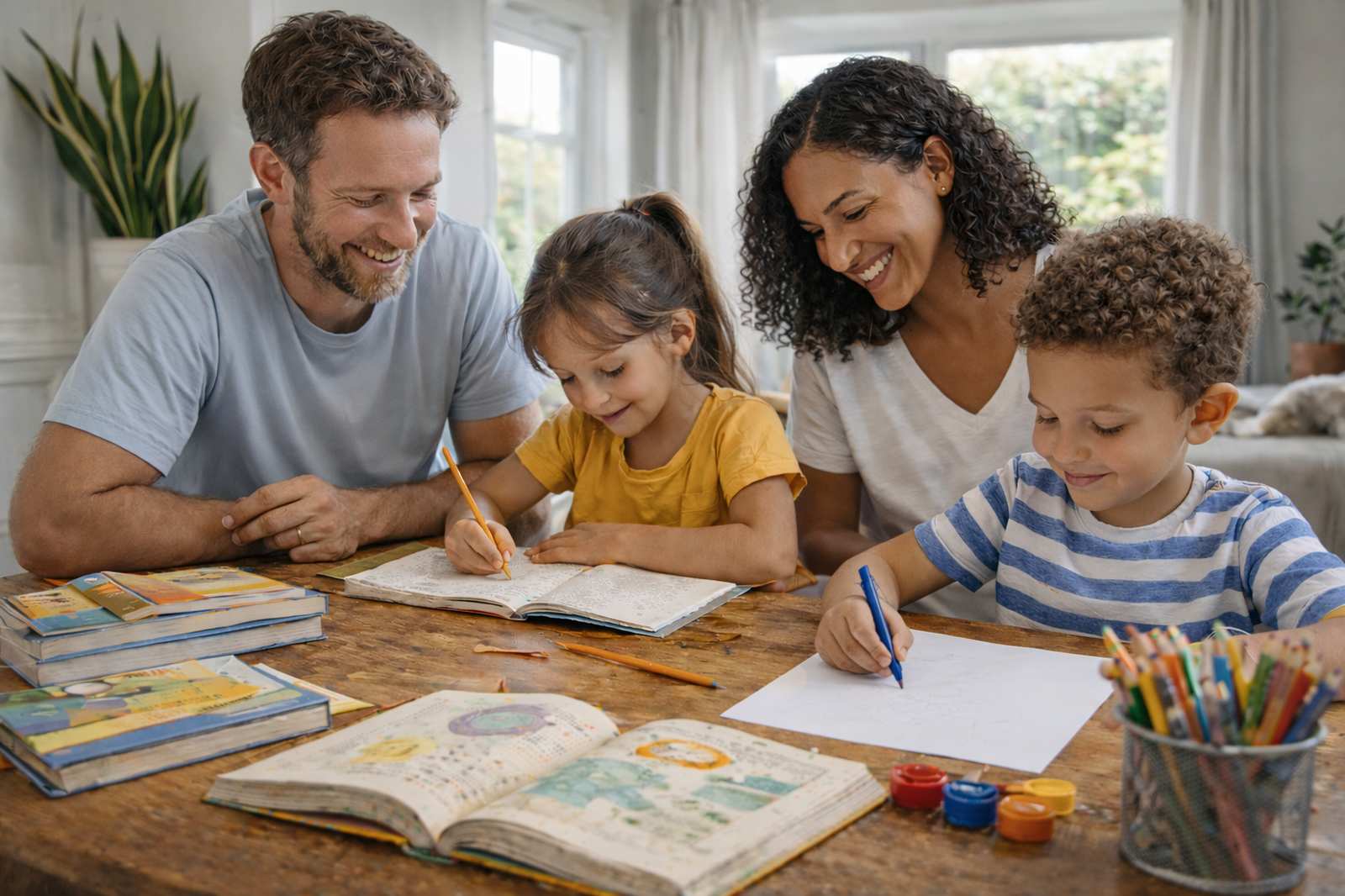
Home schooling (also called elective home education) is becoming more common in the UK, and for many families it has been a life-changing decision. Every child is different, and not all children thrive in a traditional school environment. Home schooling offers families the freedom to build an education that fits a child’s needs, interests, pace, and personality.
This page is all about what home schooling in the UK really looks like, why families choose it, and how learning can happen in so many ways beyond a classroom.
What Is Home Schooling?
Home schooling means that parents or carers take responsibility for a child’s education instead of sending them to school. In the UK, education is compulsory, but school is not. This means families can legally choose to educate their children at home, as long as the education provided is suitable for the child’s age, ability, and aptitude.
There is no single “right” way to home school. Some families follow structured timetables and use textbooks, while others take a more relaxed or child-led approach. Many sit somewhere in between.
Why Do Families Choose Home Schooling?
Families choose home schooling for many different reasons, including:
- A child struggling with anxiety, stress, or mental health challenges at school
- Special educational needs that aren’t being met in a classroom setting
- Bullying or social difficulties
- A desire for a more flexible, personalised education
- Allowing a child to learn at their own pace
- Supporting a child’s passions and interests
- Family lifestyle, travel, or medical needs
For some children, school can feel overwhelming, noisy, fast-paced, or emotionally exhausting. Home schooling can provide a calmer, safer environment where children feel understood and supported.
Learning Looks Different at Home
One of the biggest myths about home schooling is that learning only happens at a desk with worksheets and textbooks. In reality, learning at home can be incredibly varied and creative.
Children can learn through:
- Real-life experiences
- Conversations and discussions
- Trips and outings
- Projects and hands-on activities
- Play and exploration
- Reading, writing, and creative work
- Online resources, videos, and courses
- Clubs, groups, and workshops
Maths can happen while baking, budgeting, or shopping. Science can happen in the garden, kitchen, or outdoors. English can be built through reading books, writing stories, keeping journals, or even running a blog. History can come alive through museums, documentaries, and historical places.
Learning doesn’t stop just because it doesn’t look like school.
Socialising as a Home-Educated Child
Another common worry about home schooling is socialisation. In reality, home-educated children often socialise more widely than school-educated children.
Instead of only mixing with children their exact age, home-educated kids often spend time with:
- Other home-educated children
- Siblings of different ages
- Adults and professionals
- Group leaders and tutors
There are many home education groups across the UK offering meet-ups, activity days, sports, trips, forest school, and creative sessions. Children build friendships naturally through shared interests, not just shared classrooms.
Structure, Freedom, and Balance
Home schooling allows families to create routines that work for them. Some children enjoy structure and predictability, while others thrive with flexibility.
A home-educated day might include:
- A short learning session in the morning
- An outing or group activity
- Creative or practical work in the afternoon
- Plenty of time for rest, play, and hobbies
There’s no pressure to rush through topics or keep up with a class. Children can spend longer on things they find tricky and move faster through things they enjoy.
Supporting Mental Health and Wellbeing
For many families, mental health is a key reason for choosing home schooling. Removing the pressures of school can help children feel safer, calmer, and more confident.
At home, children often:
- Feel less anxious
- Have fewer meltdowns or emotional crashes
- Sleep better
- Feel listened to and understood
- Regain confidence and self-esteem
When children feel secure and supported, learning often comes more naturally.
Progress Looks Different for Every Child
Home schooling is not about comparing children or ticking boxes. Progress can look different for every child, especially if they’ve had a difficult experience with school.
Some children need time to recover before they are ready to engage with learning again. This is normal and valid. Education is a long journey, not a race.
Home Schooling Is a Family Journey
Home schooling isn’t just about lessons – it’s about relationships. Families often find they grow closer, communicate better, and understand each other more deeply.
Parents learn alongside their children, and children see that learning doesn’t stop when you’re an adult.
Is Home Schooling Right for Everyone?
Home schooling isn’t the right choice for every family, and that’s okay. What matters most is finding an environment where a child feels safe, supported, and able to learn.
For many families in the UK, home schooling offers freedom, flexibility, and a chance for children to be themselves.
Final Thoughts
Home schooling in the UK is a valid, legal, and increasingly popular choice. It allows children to learn in ways that suit them, at a pace that feels right, in an environment where they feel understood.
Education doesn’t have to look one way to be meaningful. Sometimes, the best learning happens outside the classroom.